Skip to content

MCS Certified Installers Explained

N Northline Heat Pumps
10 min read

Why MCS Matters for Heat Pumps

Choosing an MCS certified installer is one of the simplest ways to reduce risk when you're investing in a heat pump—especially in Greater Manchester, where property types range from Victorian terraces to newer flats and suburbs with very different insulation levels and radiator layouts. MCS is not just a badge; it's a UK quality assurance framework that sets expectations for how heat pumps are designed, installed, commissioned and handed over, with consumer protection built in.

If you're aiming for government support, or you simply want clear paperwork and a system that performs as designed, understanding what MCS does (and doesn't) cover will help you ask the right questions before you sign anything. For most homeowners, the first time MCS becomes visible is when grants or compliance come up. The Boiler Upgrade Scheme in England and Wales is installer-led: your installer applies for the voucher and the grant is taken off the amount you pay.

As of August 2026, the BUS provides £7,500 off the cost and installation of air-to-water, ground source and water source heat pumps, and £2,500 for air-to-air heat pumps in residential properties. There is also a time-limited uplifted grant of £9,000 for eligible off-gas-grid properties installing an air-to-water or ground source heat pump, available from 21 July 2026 until 31 March 2027. If you are relying on BUS support, an MCS-certified route is not an optional extra; it's fundamental to eligibility.

It's equally important to understand what MCS-certified is not. It is not a promise that a heat pump will be silent in every location, or that it will automatically be cheap to run in a poorly insulated home, or that every installer will give identical design advice. MCS sets minimum process and technical expectations; it doesn't remove the need for a proper survey, realistic conversations about fabric improvements, and a design that suits your lifestyle.

MCS Essentials at a Glance

  • An MCS certification is about documented design, safe installation, and accountable handover.

  • An MCS heat pump installer should be certified for the specific heat pump scope they're fitting.

  • For England and Wales, Boiler Upgrade Scheme support is accessed through an MCS-certified installer.

  • MCS-certified installers must also be part of a recognised consumer protection scheme.

  • You should expect room-by-room heat loss and a clear system design, not just a unit size.

  • Good handover paperwork matters as much as tidy pipework for long-term peace of mind.

What MCS Certification Covers

MCS stands for the Microgeneration Certification Scheme. In practical terms, it operates on two fronts: product certification (so equipment meets relevant standards) and installer certification (so a business can demonstrate it has the competence, processes and oversight to deliver compliant work). For heat pumps, the core technical standards are MIS 3005-D (design) and MIS 3005-I (installation).

From late 2025 onward, MCS has been moving to a redeveloped installer scheme (often referred to as MCS:2025), with a transition period continuing through 2026 and into 2027. For homeowners, the key point is that an installer's certification should be current, in-scope for the technology being installed, and backed by an accredited certification body.

A useful distinction is between an MCS certified heat pump installer and other common trade credentials. Heat pump work usually blends plumbing, electrics, controls and building regulations. You may see installers who are also registered for electrical or building regulations self-certification routes, which can make administration smoother. None of that replaces MCS; instead, MCS sits over the heat pump system as a whole—particularly the design evidence, commissioning, and handover documentation.

Another point many homeowners miss: an installer can be MCS certified as a business, but still use subcontractors. That is not automatically a problem. What matters is who takes responsibility for the compliant design, the commissioning, and the final certification issued for your installation. The business holding the MCS certificate must own that accountability, regardless of who physically turns the spanners on site.

Handover and Documentation Requirements

What to expect within 10 days and how to recognise a complete commissioning pack

Design and Heat Loss Assessment

So what does an MCS-aligned heat pump design actually look like in the real world? It should start with a proper heat loss assessment, typically room-by-room, that considers insulation levels, building fabric, ventilation and design temperatures. That heat loss then informs emitter performance (radiators or underfloor heating) at a chosen maximum flow temperature. This is where quality shows: a heat pump is most comfortable and efficient when it can run at lower flow temperatures for longer periods. If the numbers show your existing radiators cannot deliver enough heat at sensible flow temperatures, the design should be honest about what needs changing—whether that's upsizing specific radiators, adjusting pipework, or improving insulation so the heat pump can be smaller. A homeowner can still end up disappointed if a system is sized around guesswork, if radiators are left undersized for lower flow temperatures, or if controls are set up in a way that fights the physics of heat pumps.

Installation Project Stages

What to Expect from Start to Handover

Step-by-Step Process

What to Expect from Start to Handover

A well-run project tends to follow a predictable sequence. Initial suitability check covers basic property details, current heat source, hot water needs, and any constraints. Home survey and measurements provide room-by-room assessment, emitter checks, cylinder space, and outdoor unit siting. Documented system design sets out heat loss outputs, proposed flow temperature strategy, emitter plan, controls approach, and electrical considerations. Installation and commissioning involve the physical install plus configuration, balancing and performance-critical settings. Handover and certification deliver a clear customer pack, explanation of controls, maintenance requirements, and the MCS paperwork. After-install checks establish a sensible plan for servicing and performance questions once you've lived with the system.

Good MCS work is mostly invisible: it shows up in stable comfort and predictable running costs.

Pre-Contract Checks for Your Written Offer

  • Room-by-room heat loss included
  • Maximum flow temperature stated
  • Radiator changes clearly itemised
  • Hot water cylinder plan confirmed
  • Outdoor unit location and clearance explained
  • Condensate and frost management described
  • Electrical requirements and isolators specified
  • Handover pack contents listed in writing

The Critical Handover Moment

The handover is the moment many problems either get prevented—or get baked in. MCS documentation for heat pumps isn't just a certificate and a manual; it's a set of information that proves what was designed, what was installed, and how it was commissioned. In an MCS-aligned heat pump handover pack you would typically expect to see items such as the MCS certificate, an invoice marked paid, insurance-backed warranty details (where applicable), the heat loss calculations (including design temperatures and emitter duties), and the design maximum heat emitter flow temperature.

You should also receive maintenance requirements, manufacturer manuals for major components (heat pump, controls, hot water cylinder), a system performance estimate used for the final contract (including any recorded changes), and commissioning/control values. For ground source systems, you should also expect the ground heat exchanger design documentation. You should also be told how you will receive building regulations compliance evidence where required.

Timing matters too. Government guidance for homeowners notes that if you used an MCS-certified installer, you should receive an MCS commissioning certificate within 10 days of completion. Related government guidance on registering energy devices also states that, if the contractor is MCS certified, the energy device should be registered with MCS's Microgeneration Installation Database within 10 days of installation. Those timeframes are helpful because they give you something concrete to ask for—without chasing endlessly for months.

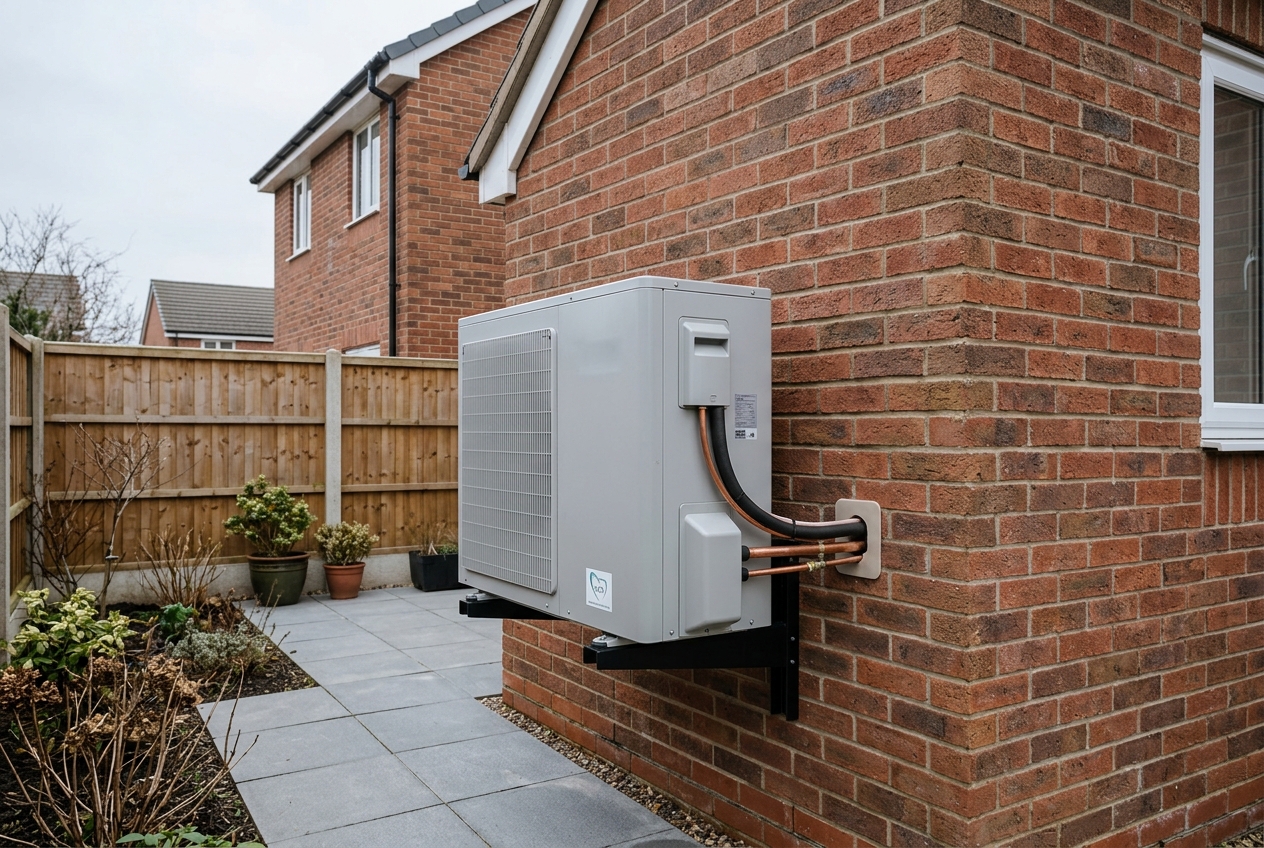
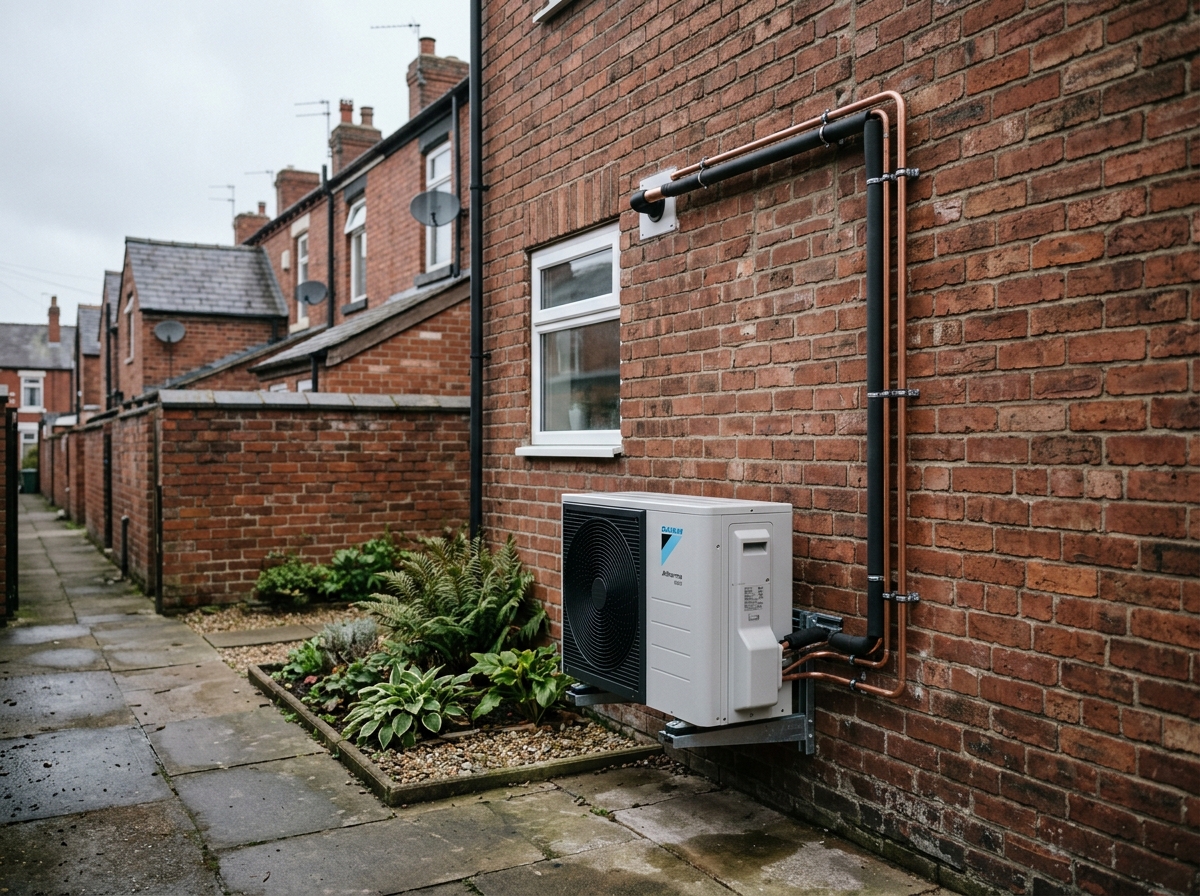
Heat pump outdoor unit installed on residential property
Professional heat pump installation requires careful siting and emitter matching

Weighing MCS Certification Trade-offs

It's fair to weigh the advantages and disadvantages of insisting on an MCS route, rather than treating it as an unquestioned good.

The Benefits

The benefits are clear: eligibility for schemes like BUS in England and Wales, structured design and commissioning expectations through MIS 3005, a defined set of handover documents, and additional consumer protection because MCS-certified installers must also be registered with a recognised consumer protection scheme such as RECC or HIES. There is also an audit and compliance framework in the background, which encourages installers to keep good records. When something does go wrong, understanding the complaint pathway is part of what you are effectively paying for. MCS-certified work sits alongside consumer code protection, and those protections are designed to help when communication breaks down.

The Drawbacks

The drawbacks are more practical than technical. Requiring MCS can narrow the pool of available installers, which can affect lead times. It can also add administrative steps, and not every homeowner enjoys the paperwork-heavy feel of a compliance process. Most importantly, MCS is not a substitute for good judgement: it does not guarantee that an installer will choose the best location for an outdoor unit on a tricky site, or that every detail of customer education will be handled well. You still need to check that the proposal fits your home's fabric, that radiator changes are explained rather than glossed over, and that the commissioning approach is clear.

When Issues Arise

A sensible first step is always to raise the issue formally with the installer and give them a reasonable chance to put it right. Ofgem's consumer-facing guidance notes the importance of allowing the installer time to respond before escalating, and related guidance indicates you may need to have raised the issue promptly and given the installer at least 10 working days to resolve it before going to the consumer code. Ofgem's consumer advice also notes that, for the MCS complaints process, a case must be registered with MCS no more than two years after the incident took place. The practical takeaway is straightforward: keep written records, don't delay if comfort or hot water is affected, and ask for the installer's consumer code membership details at the start of the project.

Making Confident Decisions

Focus on What Drives Long-Term Comfort and Performance

By August 2026, homeowner interest in heat pumps has broadened beyond «Should I get one?» to «How do I make sure it's done properly?» That shift is healthy, because the quality of the survey and the design is where most long-term outcomes are decided.